The alarm goes off. Your hand reaches for your phone. You tell yourself you are just turning off the alarm, but your thumb is already moving.
One notification. Then email. Then a news headline that pulls you into a scroll. Then a group chat. Then Instagram. Then a work message that makes your chest tighten before your feet even touch the floor.
Thirty minutes pass. You are still in bed, fully awake but already drained. Your morning is gone and your day has not started yet.
If this sounds familiar, you are not alone and you are not lazy. In Chapter 2 of Productivity Micro-Habits: Tiny Changes, Big Results, author Grace Keys explains that the problem is not willpower. It is sequence. The very first input your brain receives in the morning sets the direction for everything that follows, and when that first input is someone else's agenda (emails, notifications, news), you spend the rest of the day reacting instead of leading.
Prefer to watch? Here's the 2-minute version:
Why the Phone Grabs Your Morning
Your brain wakes up in a specific neurological state. When you first wake up, your mind transitions slowly from sleep to full alertness. During these quiet morning minutes, your attention is especially vulnerable to external disruption.
This is why checking your phone first thing feels so sticky. An inbox full of unread emails, breaking news headlines, or group chat notifications instantly throws your brain into reaction mode before you have even gotten out of bed or taken a sip of water.
Grace Keys describes this in Productivity Micro-Habits as the morning vulnerability window: a brief period where your brain is highly impressionable and whatever you feed it first gets disproportionate mental real estate for the rest of the day.
Feed it your priorities, and you start the day with direction. Feed it everyone else's priorities, and you start the day in a fog of low-level stress that never quite lifts.
The First-Hour Rule, Made Tiny
The first-hour rule is simple: protect the first 60 minutes of your day from your phone.
That does not mean you need a two-hour journaling-meditation-cold-plunge morning routine. Grace Keys is clear about this in Chapter 2: big morning overhauls fail because they demand too much change at once. The first-hour rule works because it only asks you to change one thing: when you pick up your phone.
You do not need to fill that first hour with anything impressive. You can make coffee, eat breakfast, take a shower, get dressed, sit on your porch, or do nothing at all. The only rule is that the phone stays untouched.
The goal is not productivity. The goal is ownership. When you get through your first hour without being pulled into someone else's world, you start the day feeling like it belongs to you.
A 3-Step Phone-Free Start
If going cold turkey on the morning phone check feels impossible, Grace Keys recommends a three-step approach that makes the transition gradual and sustainable.
Step 1: Move the Phone Out of Arm's Reach
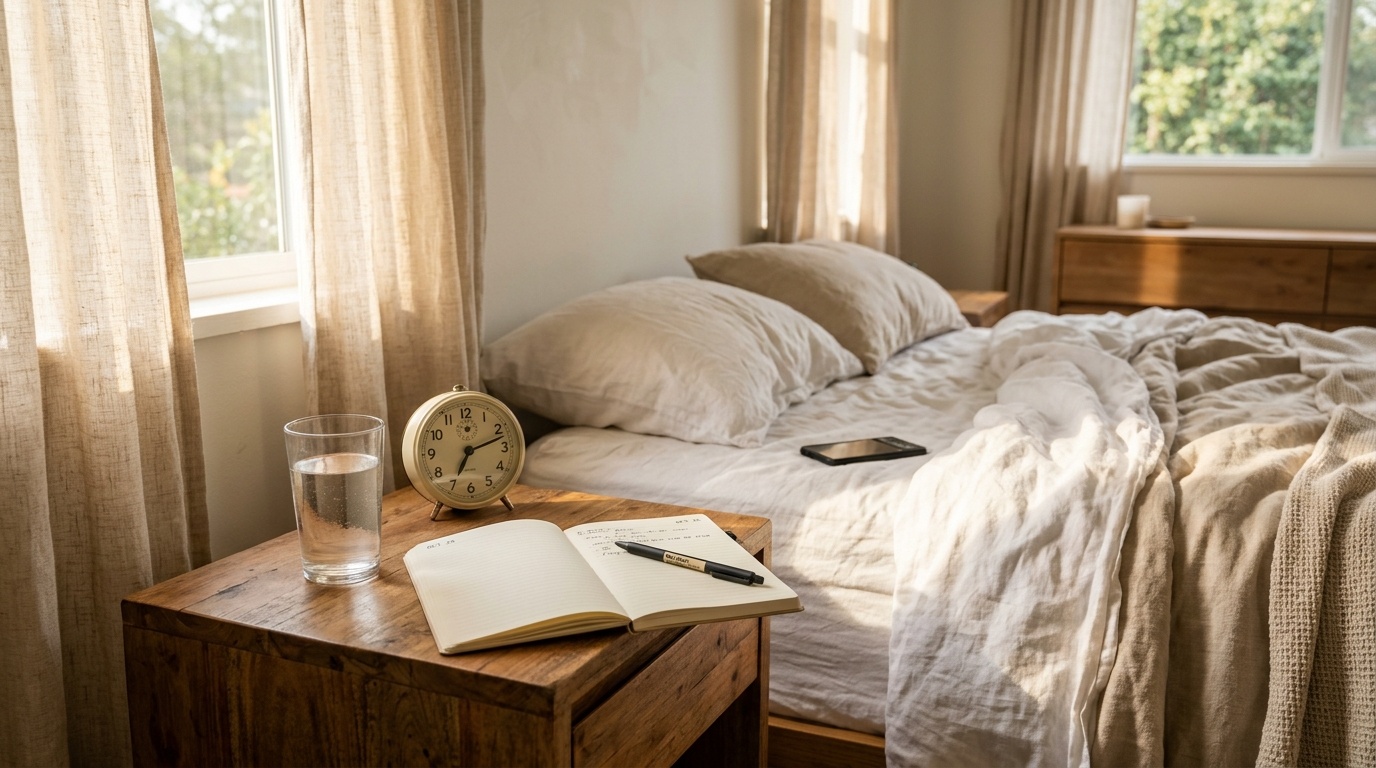
The night before, plug your phone in across the room or in another room entirely. Use a cheap alarm clock or a smart speaker for your alarm. The physical act of having to get up and walk to your phone creates just enough friction to break the automatic reach.
This is not about discipline. It is about designing your environment so the easy choice is the right choice. When your phone is on your nightstand, checking it is effortless. When it is across the room, you have a moment to choose differently.
Step 2: Anchor One Tiny Morning Action
Before you walk to your phone, do one small thing that is yours. Grace Keys calls this the anchor action: a micro-habit so tiny it requires no motivation.
Examples:
- Fill a glass of water and drink it.
- Step outside for 30 seconds and look at the sky.
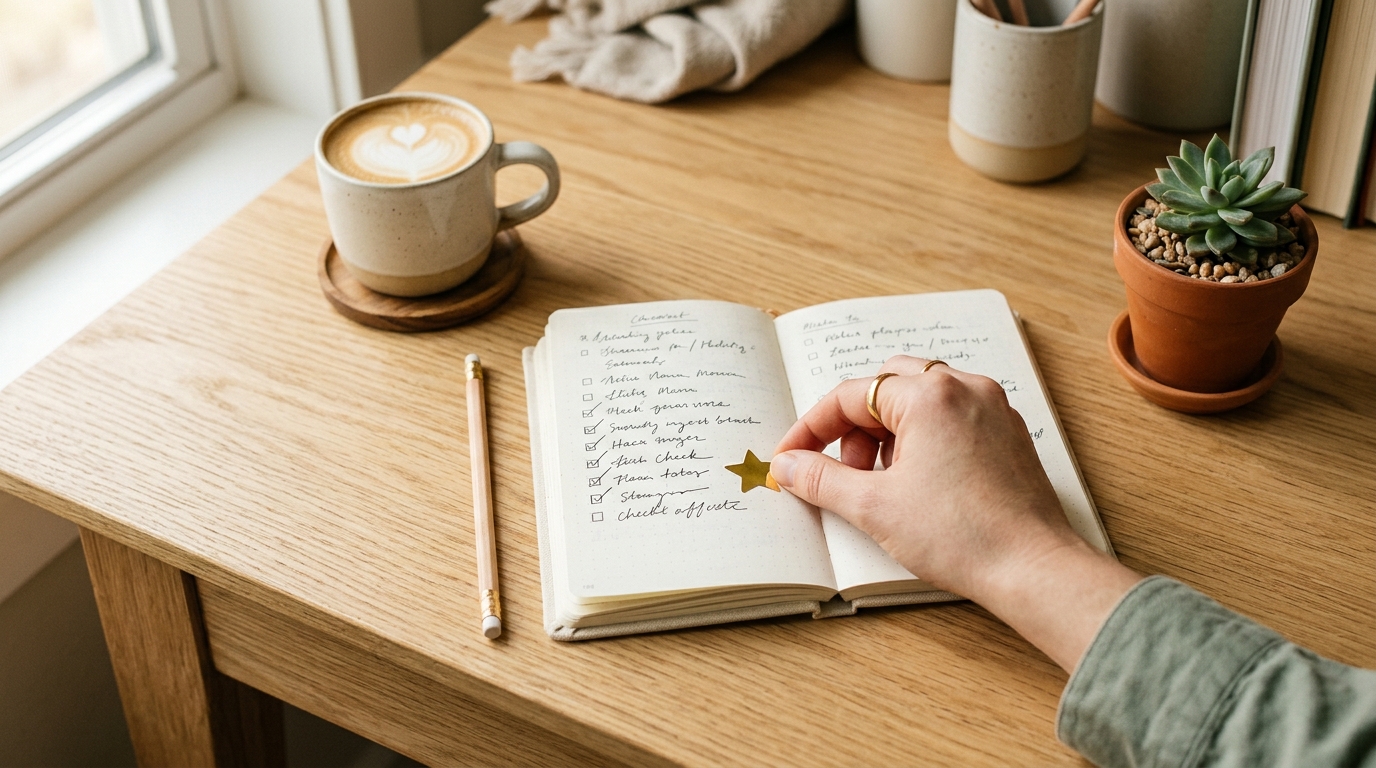
- Write one sentence in a notebook (anything at all).
- Stretch your arms overhead for 10 seconds.
The anchor action is not about health or productivity. It is about establishing a pattern: "I do something for myself before I do something for everyone else." Over time, this pattern rewires the morning sequence.
Step 3: Set a Phone Window
Instead of picking up your phone whenever the urge hits, set a specific time for the first phone check. Start with 15 minutes after waking. Once that feels normal, push it to 30 minutes, then 45, then a full hour.
Grace Keys notes in Productivity Micro-Habits that most people find the jump from 15 minutes to 30 minutes is the hardest. After 30 minutes, the urgency fades and the remaining half-hour feels easy.
What to Do on Chaotic Mornings
Not every morning is calm. You have kids who need lunches packed. You have a meeting at 7:30 AM. You have a puppy who does not respect your morning boundaries.
The first-hour rule adapts to chaos. On those mornings, Grace Keys recommends the minimum viable version: protect just the first 10 minutes.
Ten minutes is enough time to drink a glass of water, take a few breaths, and remind yourself that the day is yours before you hand it over. It is not the full hour, but it keeps the habit alive.
The worst thing you can do is abandon the rule entirely on hard days. That is how habits die: not from one bad morning, but from the belief that if you cannot do it perfectly, there is no point doing it at all. Author Grace Keys addresses this directly in Productivity Micro-Habits: "A shrunk habit is still a habit. A skipped habit is the start of a streak."
Making It Stick: Anchor and Never Miss Twice
Two principles from Productivity Micro-Habits make the first-hour rule sustainable long-term.
The Anchor Principle
Attach your phone-free morning to something you already do every single day. If you always make coffee first thing, the coffee becomes the anchor. Your new sequence is: alarm goes off, make coffee, drink coffee, then (and only then) check phone.
The micro-habit ladder works the same way: you stack small actions onto existing routines until the new behavior feels as automatic as the old one. You are not adding something to your morning. You are inserting a pause before the phone.
The Never-Miss-Twice Rule
You will check your phone first thing some mornings. You will forget. You will have a rough night and grab it on autopilot before your eyes are fully open.
That is fine. One slip does not break the habit. Grace Keys teaches a simple rule: never miss twice. If you checked your phone first thing today, protect tomorrow's first hour. The streak restarts immediately. No guilt, no self-criticism, just a quiet reset.
The people who build lasting morning habits are not the ones who never slip. They are the ones who get back to it the next day without making the slip mean something about who they are.
FAQ
Q: Do I really need a full hour, or is even 15 minutes enough? A: Fifteen minutes is a great starting point and already better than zero. Grace Keys recommends building toward a full hour over several weeks, but even a consistent 15-minute phone-free start can change how your morning feels. Start where you are and extend the window when it feels natural.
Q: What if my job requires me to check messages first thing in the morning? A: If you genuinely have an on-call or early-response role, adjust the rule: check only the one app that matters for work, respond to anything urgent, then put the phone down. The goal is to avoid the open-ended scroll, not to ignore genuine responsibilities. Most people find that the "urgent" messages can wait 15 to 30 minutes more often than they expect.
Q: Should I use a screen time app to block my phone in the morning? A: Screen time blockers and focus modes can help, especially in the first few weeks. But Grace Keys notes in Productivity Micro-Habits that the strongest long-term solution is physical distance (phone in another room), not a software lock you can override with a tap. Use both if it helps, but do not rely on the app alone.
Q: What if I live alone and my phone is my alarm clock? A: Buy a simple alarm clock. They cost less than a cup of coffee and they solve the problem completely. When your alarm and your phone are the same device, the temptation is built into the first action of your day. Separating them removes the trigger at the source.
Your Next Step
Tomorrow morning, try one thing: plug your phone in across the room tonight, and do not pick it up until you have done one small thing for yourself first. A glass of water. A stretch. A moment of quiet. That is the whole experiment.
If you want the complete system for building tiny, lasting habits that stack into real change, check out Productivity Micro-Habits: Tiny Changes, Big Results by Grace Keys at https://urmspublishing.com/books.
We'd Love to Hear From You
"Which insight or framework in this guide resonated with you most? Share your thoughts below!"
Share your feedback or questions with Grace KeysProductivity Micro-Habits: Tiny Changes, Big Impact
By Grace Keys • URMS Publishing
This practical framework was pulled from Productivity Micro-Habits: Tiny Changes, Big Impact by Grace Keys. Discover proven cognitive tools, actionable worksheets, and transformative habits.
Never Miss an Insight
Join our VIP Reader Team for weekly frameworks and book giveaways.
Subscribe Free